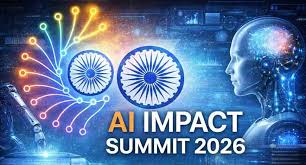
The recent AI Impact Summit in India, convened under the banner of “Welfare for All, Happiness for All,” signals something important about where global artificial intelligence governance is heading. AI is no longer framed primarily as a race for technological dominance. It is increasingly discussed as public infrastructure, something that must be built deliberately, governed responsibly, and aligned with societal priorities.
From an AI4PEP perspective, this shift is both encouraging and urgent.
Across Africa, Asia, and Latin America, the stakes of AI adoption are particularly high. These are regions where climate change is accelerating disease risk, where health systems operate under resource constraints, and where digital transformation is unfolding unevenly. The central question raised at the Summit, how do we ensure AI improves lives, not just productivity? is not theoretical for the Global South. It is operational.
Moving from Tools to Ecosystems
One of the strongest signals emerging from global AI convenings like the Summit is a move away from isolated AI applications toward national AI ecosystems. That means investing in compute capacity, secure data-sharing frameworks, ethical governance mechanisms, and regulatory clarity.
This resonates deeply with AI4PEP’s model.
AI4PEP was not built as a single research lab. It is a distributed, multi-country network operating across more than 20 countries in the Global South. Each hub works on locally defined health challenges, from vector-borne disease forecasting in Ghana, to wastewater-based pathogen detection in Tunisia, to air-quality and respiratory risk modelling in South Africa, to epidemic intelligence systems supporting mpox preparedness in West and Central Africa.
But the unifying thread is not a specific algorithm. It is infrastructure.
We focus on strengthening:
- local analytic capacity
- data governance literacy
- ethical AI deployment
- decision-support integration within ministries of health
In other words, we work on the ecosystem, not just the tool.
Why This Matters for Climate and Health
Climate change is reshaping public health in real time. Vector habitats are shifting. Heatwaves are intensifying. Flooding is altering water systems. Zoonotic spillover risks are evolving.
AI can help detect, model, and anticipate these changes, but only if it is grounded in local data and accountable governance.
The danger, if we are not careful, is twofold:
- Technological concentration, where AI capacity remains centralized in a few countries.
- Algorithmic inequity, where underrepresented populations are statistically invisible in models that guide resource allocation.
This is why AI governance cannot be separated from development policy. It must include data sovereignty, community participation, and capacity building.
Events like the AI Impact Summit reflect growing awareness of this reality. But awareness must translate into partnership.
Credibility Through Implementation
AI4PEP’s credibility does not come from policy statements alone. It comes from implementation.
In Ghana, acoustic AI models classify mosquito species using tens of thousands of wingbeat recordings to anticipate malaria transmission windows.
In Tunisia, machine learning integrates wastewater surveillance data to detect pathogens before clinical case surges.
In South Africa, AI-driven air quality systems forecast respiratory health risks in under-monitored communities.
In Brazil, tools like InteliGenteCards democratize AI literacy and foster ethical debate at the community level.
These projects demonstrate that AI can:
- extend early warning systems
- support evidence-informed policymaking
- democratize analytic capacity
- and strengthen preparedness against climate-sensitive disease threats
But they also demonstrate something equally important: AI must be co-designed with those who will use it.
From Global Dialogue to Global Responsibility
The AI Impact Summit highlights that governments are increasingly serious about shaping AI futures rather than reacting to them. For networks like AI4PEP, this creates an opportunity, and a responsibility.
The next phase of AI innovation must prioritize:
- Equitable compute and data access
- Interoperable digital public infrastructure
- Cross-regional knowledge exchange
- Ethical oversight embedded in technical design
- Local capacity as a core metric of success
AI4PEP stands at the intersection of these priorities. Our work shows that responsible AI is not slower innovation, it is more sustainable innovation.
If AI is to support climate resilience and public health equity, it must move beyond isolated pilots. It must become embedded within national systems, owned by local institutions, and trusted by communities.
The AI Impact Summit in India underscores a global truth: AI’s future will not be defined solely by computational breakthroughs. It will be defined by whether we build systems that are inclusive, anticipatory, and accountable.
For AI4PEP, the path forward is clear. The future of AI in global health is not just about intelligence. It is about justice, preparedness, and shared responsibility.