Across the global conversation on artificial intelligence, one question continues to stand out: how can AI move beyond promise and deliver meaningful, real-world impact? Recent developments from the AI4PEP Brazil team offer a compelling answer.
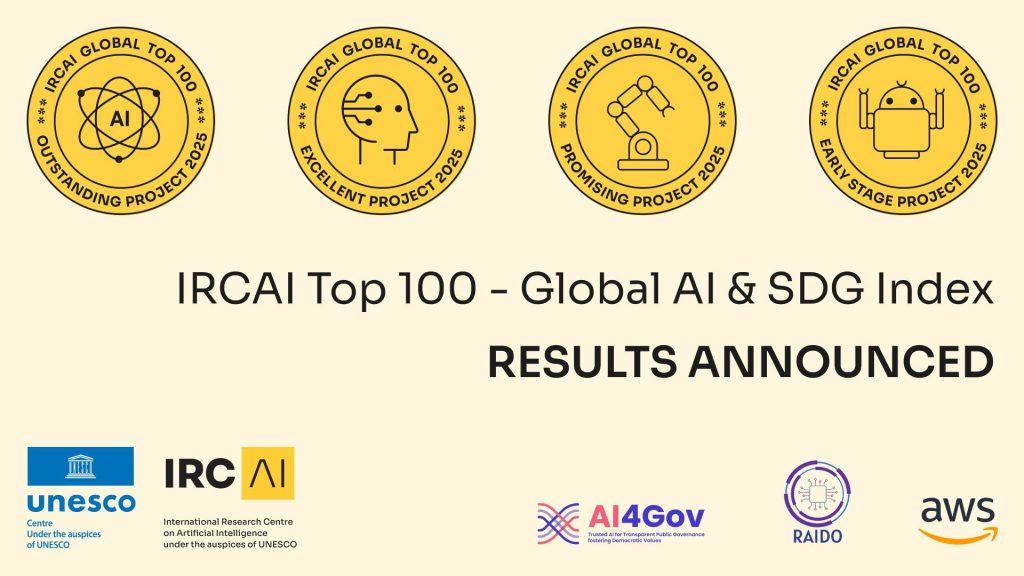
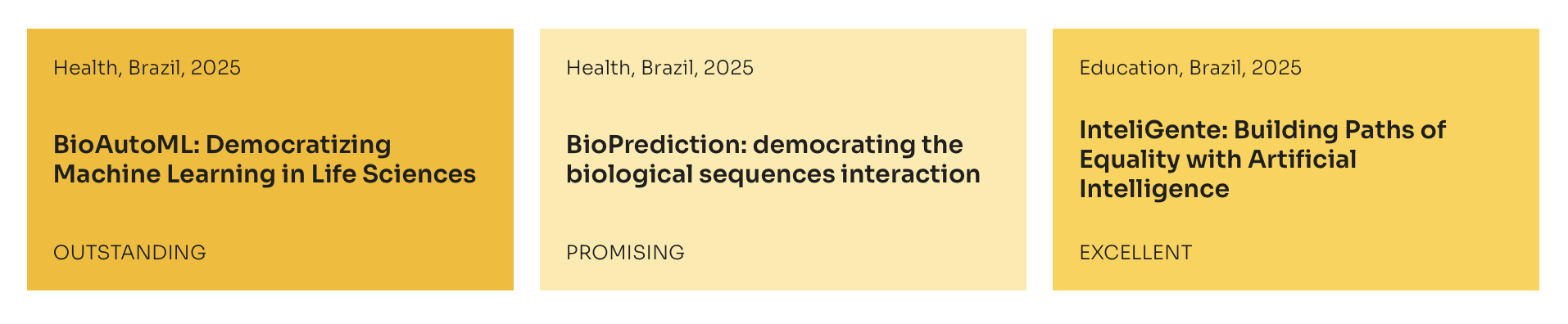
Three initiatives, InteliGente, BioAutoML, and BioPrediction, have been recognized among the Global Top 100 AI Solutions for the Sustainable Development Goals by the International Research Centre on Artificial Intelligence (IRCAI) under UNESCO. This recognition is more than an achievement; it signals the growing importance of locally grounded innovation in shaping global solutions.
What makes these tools particularly noteworthy is not only their technical sophistication, but their orientation toward real challenges. Rather than existing as standalone technologies, they are designed to support decision-making, expand access to AI capabilities, and generate actionable insights in contexts where resources and infrastructure may be limited.
InteliGente, for example, reflects a commitment to accessibility. As an educational and engagement tool, it helps facilitate discussions around artificial intelligence, ethics, and societal impact. In doing so, it addresses a critical gap: the need to make AI understandable and usable beyond technical communities. By creating space for dialogue, it strengthens the foundation for more inclusive and responsible innovation.
BioAutoML focuses on simplifying complex analytical processes. By automating aspects of machine learning workflows, it enables researchers and practitioners, including those without advanced technical backgrounds, to work with biological and health data more effectively. This kind of tool is essential in accelerating research while reducing barriers to entry.
BioPrediction, on the other hand, demonstrates the power of predictive analytics. By leveraging data to anticipate patterns and outcomes, it supports more proactive approaches to health and environmental challenges. In contexts where early intervention can save lives or prevent crises, such capabilities are particularly valuable.
Taken together, these tools reflect a broader shift in how AI is being developed and deployed. They emphasize usability, context, and impact, ensuring that innovation is not only advanced, but also relevant. This aligns closely with the AI4PEP approach, which prioritizes solutions that are embedded within local systems and responsive to real-world needs.
Their recognition on a global stage also highlights an important dynamic: impactful AI does not have to originate from traditional centers of technological power. When researchers and practitioners are equipped to develop solutions within their own contexts, the results can resonate far beyond national borders.
At a time when the Sustainable Development Goals demand both urgency and creativity, initiatives like those from AI4PEP Brazil remind us that progress often begins with grounded, practical innovation. By connecting knowledge, community, and technology, they demonstrate how AI can move from abstraction to application, and from potential to measurable change.