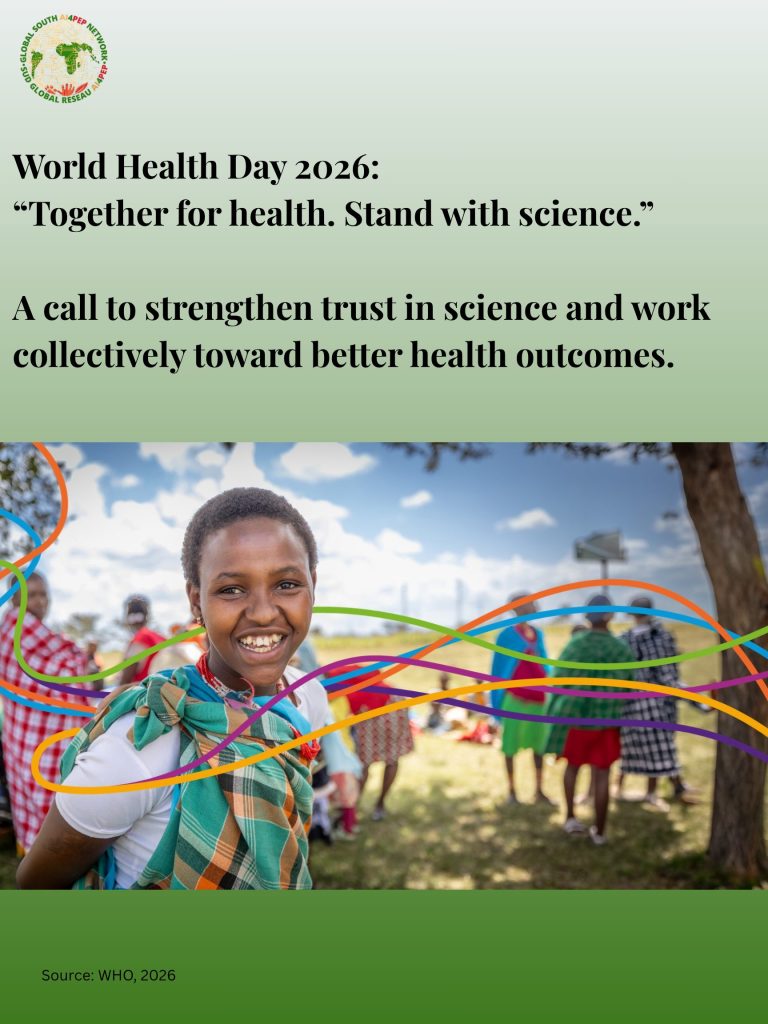
On World Health Day 2026, the global community is brought together under a clear and timely message: “Together for health. Stand with science.”
This year’s theme is timely and urgent, a powerful reminder that improving health outcomes worldwide depends on collective action and stronger collaboration across sectors and regions. It calls for renewed commitment to science, not just as knowledge, but as a shared foundation for decision-making and action.
Recent global discussions, including the One Health Summit, echo this message. They highlight the growing recognition that health challenges today are deeply interconnected. Human health is closely linked to animal health and the environment, and addressing issues such as emerging diseases, climate-related risks, and food security requires more integrated, cross-sector approaches.
However, while the vision of One Health is widely supported, its implementation remains uneven. Data systems are often fragmented, collaboration across sectors can be limited, and many local realities are still underrepresented in global health solutions. Bridging these gaps is essential to truly “stand with science” in practice.
At AI4PEP, this is where our work contributes to the broader global effort.
Across our network in Africa, Asia, and Latin America, AI4PEP teams are working to strengthen health systems by supporting data-informed, locally grounded approaches to epidemic preparedness and response. From developing AI-powered platforms that integrate human, animal, and environmental health data for early outbreak detection, to supporting community-level surveillance systems that provide real-time insights for local health authorities, AI4PEP’s initiatives demonstrate the breadth of our work.
Across the network, several solutions further illustrate this approach in practice. In Senegal, the development of the 3S One Health platform is enhancing community-based surveillance by integrating human, animal, and environmental data, enabling earlier detection of health risks and more coordinated responses. In South Africa, teams are advancing the AI_r air quality monitoring system, which combines low-cost sensors, community participation, and AI to generate real-time environmental data, strengthening the link between environmental intelligence and public health decision-making.
In this context, tools such as artificial intelligence are not the focus in themselves, but part of a broader effort to make science more actionable, accessible, and responsive to real-world needs. When used responsibly, they can help connect fragmented data, improve early detection of risks, and support more coordinated responses across sectors.
Crucially, these approaches are most effective when they are developed with and for communities, reflecting local contexts and priorities. This ensures that scientific innovation is not only technically sound, but also equitable and relevant.
World Health Day is ultimately a call to move from commitment to action. Standing with science means more than supporting research, it means ensuring that knowledge is translated into systems that work, for everyone.